current location: HOME Market outlook
Background - plug-in - advertisement management - content page header advertisement (mobile phone)

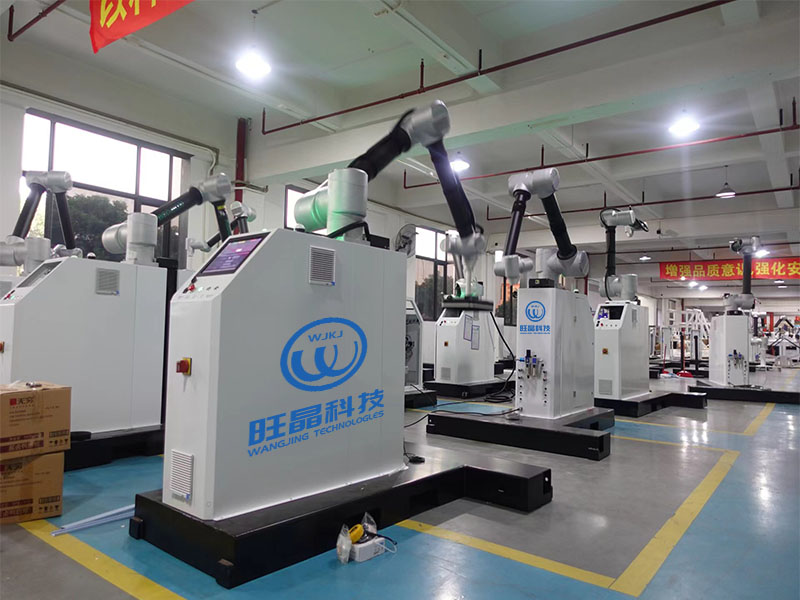
What we need to know is that this is the principle of a cooperative palletizing robot

Column: Market outlook Author: Time:2022-10-06

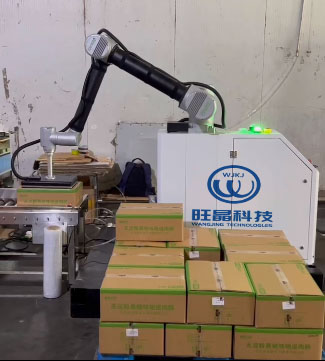
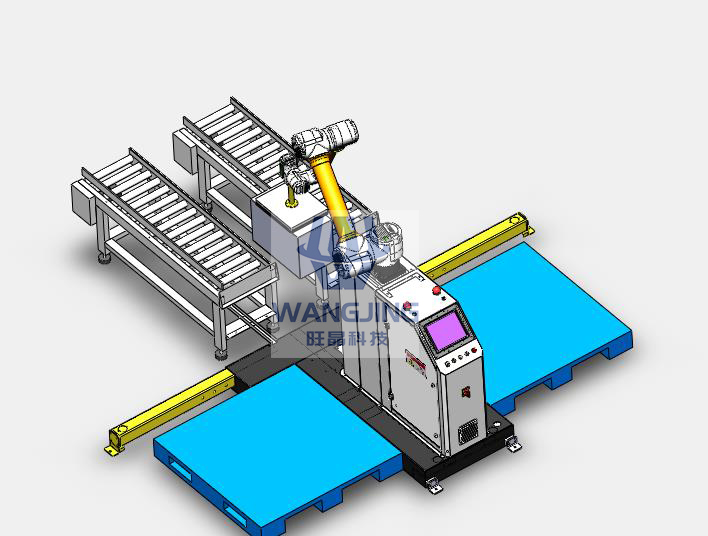
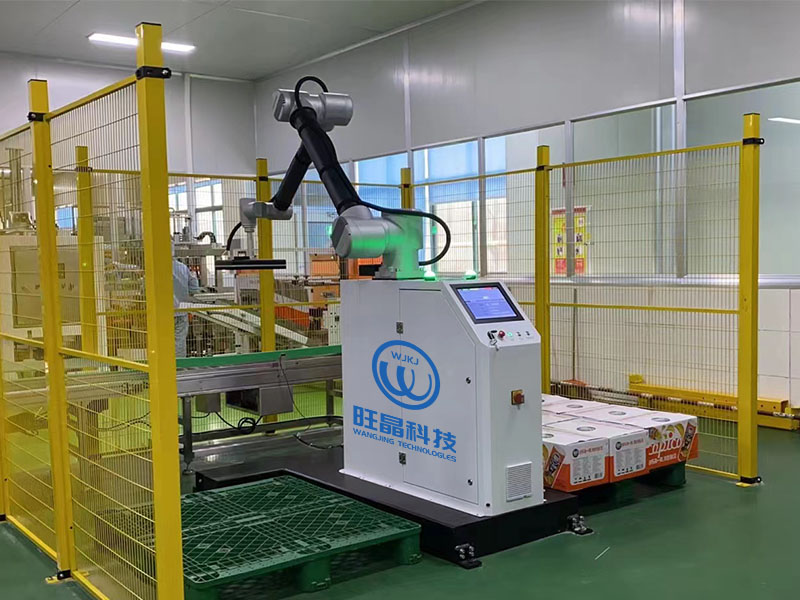
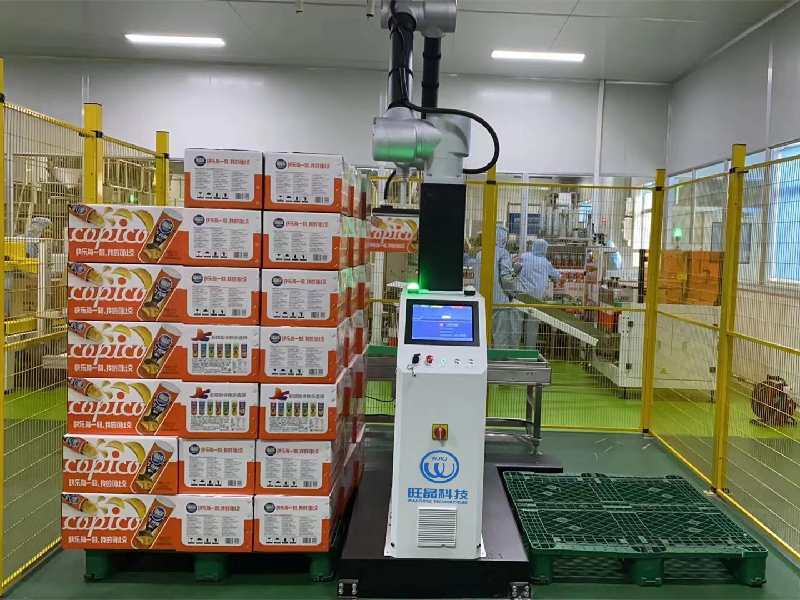
Most of the operations performed by the cooperative palletizing robot are grasping and placing operations, that is, the robot grabs materials from the conveyor belt and places them on the designated position on the pallet along the motion path. Therefore, according to the position relationship between the robot and the conveyor belt and tray when it completes stacking, and considering the obstacles in the movement process, the "door" shaped movement track is selected. It should be noted that when the robot end effector completes the stacking of cartons at different positions on the pallet, the trajectory is in the shape of a "door", and the coordinates of the trajectory end point are different only because the positions of cartons on the pallet are different.
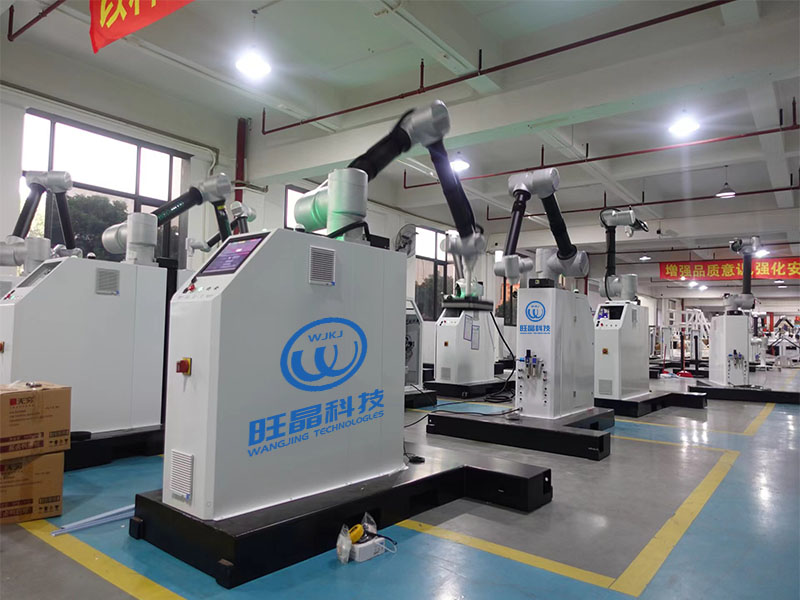


The so-called stacking is to stack materials in a certain way according to the idea of integrated unit, so that the unit stacking can realize logistics activities such as storage, handling, loading and unloading, transportation, etc. Compared with traditional manual palletizing and gantry palletizing machines, collaborative palletizing robots have been gradually applied in various fields due to their high production efficiency, small space occupation, large flexibility and low labor intensity.

Commonly used palletizing robot grab

Claw type mechanical gripper: mainly used for high-speed bag stacking;

Clamping type mechanical gripper: mainly used for case stacking;

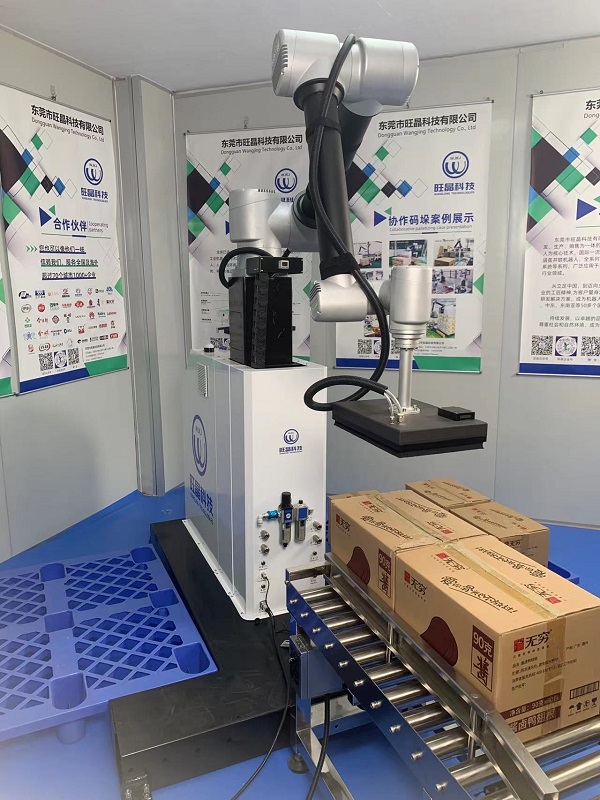
Vacuum suction mechanical gripper: mainly applicable to absorbable stacked objects;

Grasping mechanical gripper: mainly applicable to absorbable stacked objects;

Mixed mechanical gripper: suitable for collaborative grasping and placement of multiple stations.

When using the stacking robot, it is important to consider how the robot grasps the product. The vacuum gripper is the most common end of arm tool (EOAT). Relatively speaking, they are cheap, easy to operate, and can effectively load most loads. However, in some specific applications, the vacuum gripper will also encounter some problems, such as porous substrate surface, flexible packaging liquid content, or uneven packaging surface.

Classification of palletizing robots

According to the different mechanical structures, the palletizing robot includes the following three types: double ear type, rotary joint type and gantry crane type.

Tical palletizing robot: It is mainly composed of four parts: column, X arm, Y arm and claw, and can realize material palletizing with four degrees of freedom (including three moving joints and one rotating joint). The stacker has simple structure, strong rigidity and large carrying weight, and is suitable for stacking heavier materials.

Rotary joint robot: the stacker rotates around the body, including four rotary joints: waist joint, shoulder joint, elbow joint and wrist joint. This kind of stacker is programmed through teaching, that is, the operator holds the teaching box and controls the robot to move according to the specified action. Therefore, the moving process is stored in the memory and can be reproduced in the future automatic operation. This kind of robot has small volume and large range of motion, can stack one or several pallets at the same time, and can work flexibly on various product production lines.

Gantry crane: the mechanical arm is installed on the gantry crane and is called gantry stacking robot. The palletizing robot has a wide working range and can grasp heavier materials.

Cooperative palletizing robots are widely used to stack and unload various packaging products, such as nylon bags, paper bags, plastic bags, cartons, plastic containers, glass bottles and PET bottles.
Copyright Notice:The copyright of this article belongs to the original author. If the source is wrong or your legitimate rights and interests are infringed, you can contact us via email, and we will deal with it in a timely manner.
read:4402times

Related articles

Can we grasp the large demand for the application of cooperative robots in business scenarios?

Cooperative robots, from B to C, have broad market prospects. Finally, to a large extent, the application stage of intelligent cooperative robots is still based on the B-end industry market.
Market outlook2022-09-22
Can we grasp the large demand for the application of cooperative robots in business scenarios?

Characteristics and Research Scenarios of Stacking Robot

The cooperative palletizing robot is mainly composed of manipulator, wrist, wrist adjustment mechanism, arm mechanism, rotator, servo drive system, base and other components, with four degrees of freedom of body rotation, horizontal and vertical movement of arm mechanism, and wrist rotation. What are the main components and application research scenarios of the system with the cooperative palletizing robot?
Market outlook2022-09-20
Characteristics and Research Scenarios of Stacking Robot

With the development of artificial intelligence technology, the role of unmanned cooperative stackin

The role of robots in industry has replaced human workers in many manufacturing industries. Machines like mechanical arms make it possible for humans to perform tasks with brute force before automation. Now they have replaced heavy lifting and precision assembly. The use of industrial robots can not only help create products, but also reduce waste and improve safety.
Market outlook2022-10-06
With the development of artificial intelligence technology, the role of unmanned cooperative stackin

Through technical innovation, the palletizing function is realized to improve the industrial product

With the continuous progress of industrial science and technology, industrial production requires higher and higher loading and unloading speed. Traditional manual palletizing can only be used under the conditions of light materials, large changes in size and shape, and low throughput, which cannot meet the needs of industrial production. Robot stacker came into being.
Market outlook2022-09-22
Through technical innovation, the palletizing function is realized to improve the industrial product

The control technologies of the stacking robot based on artificial intelligence include

Compared with ordinary mechanical palletizer, the palletizing robot has the advantages of high efficiency, low failure rate and convenient maintenance, so it is widely used. The main task of palletizing robot control technology is to control the movement position, posture and trajectory, operation sequence and action time of industrial robot in the workspace. Now let's talk about the control technology of the stacking robot.
Market outlook2022-09-22
The control technologies of the stacking robot based on artificial intelligence include

In recent years, with the rapid development of international trade, automatic packing machines help

Automatic packaging machine is a kind of packaging equipment with high degree of automation. Usually, the undeveloped and shrunk cartons are unfolded, and then the products are put into the cartons. The whole process is automatically carried out by the automatic sealing machine without manual intervention.
Market outlook2022-11-01
In recent years, with the rapid development of international trade, automatic packing machines help

Category column