current location: HOME Market outlook
Background - plug-in - advertisement management - content page header advertisement (mobile phone)

Work flow of automatic palletizer production line

Column: Market outlook Author: Time:2022-09-20

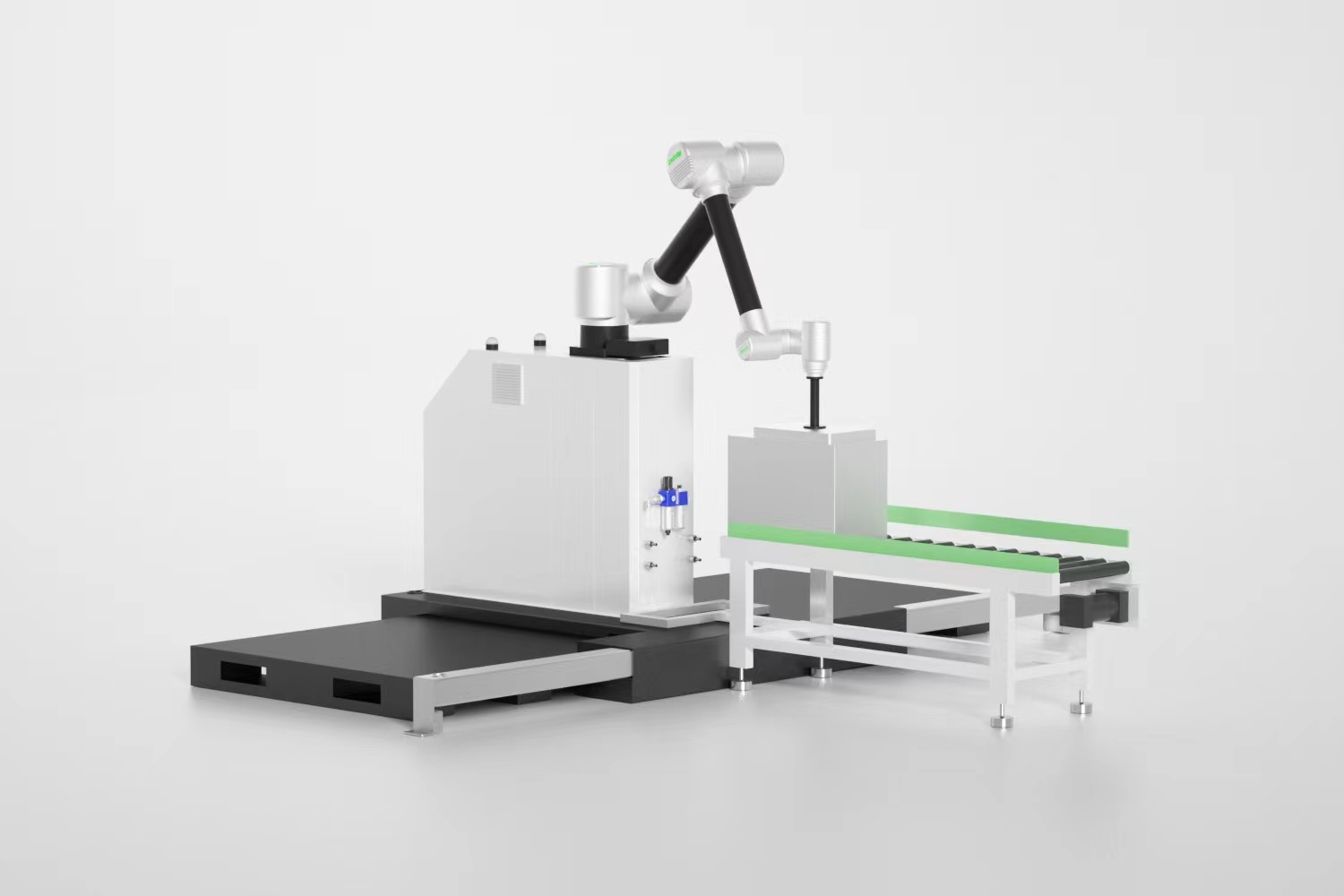
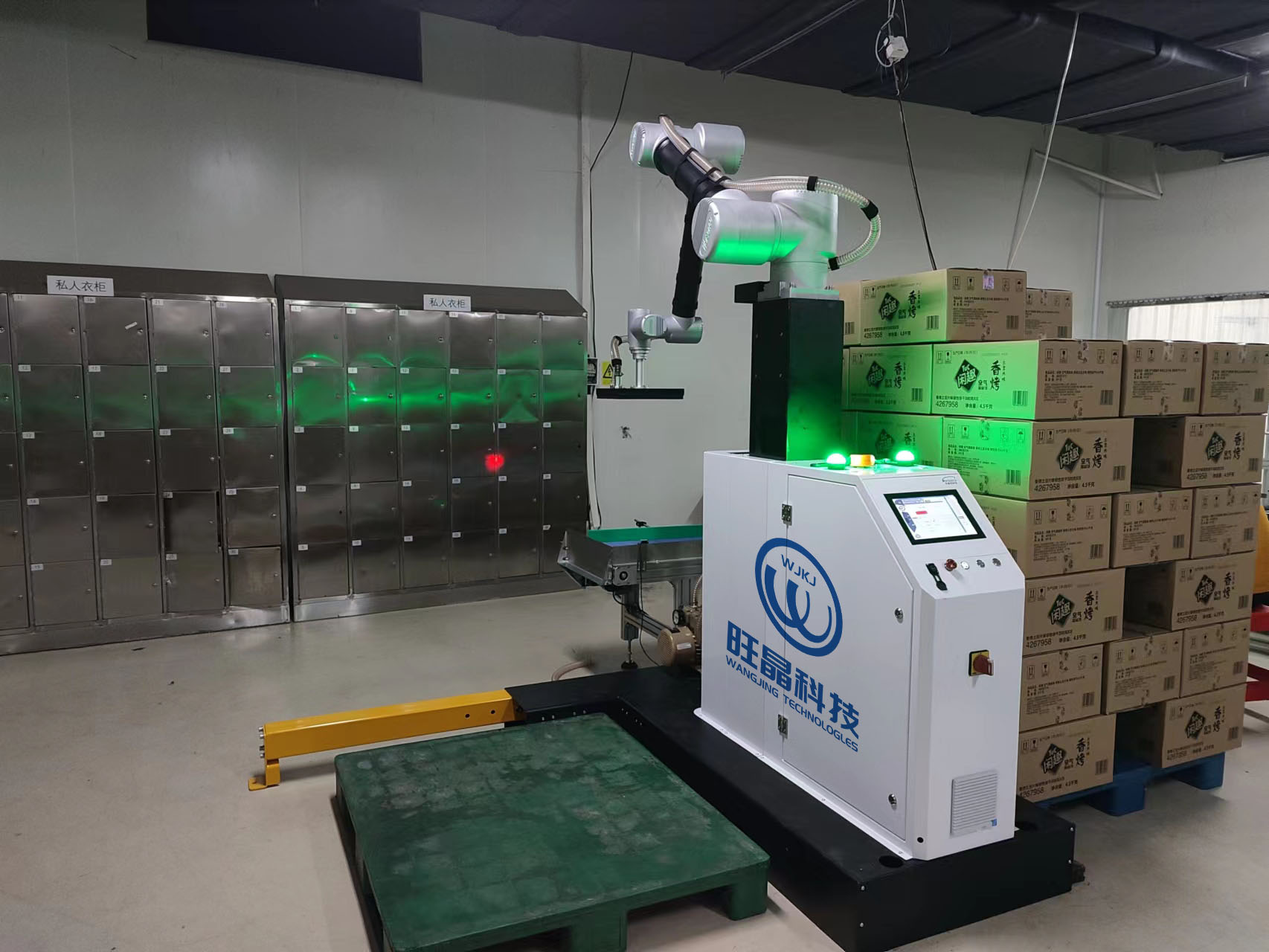
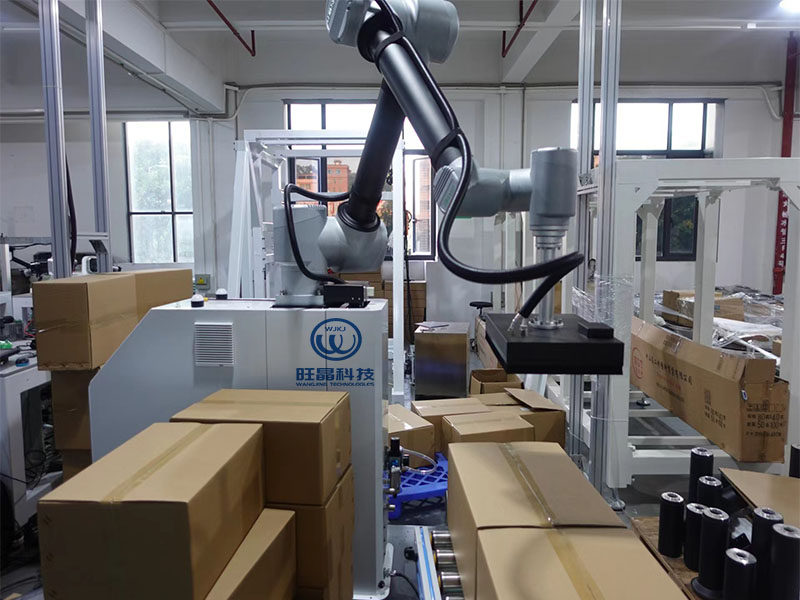
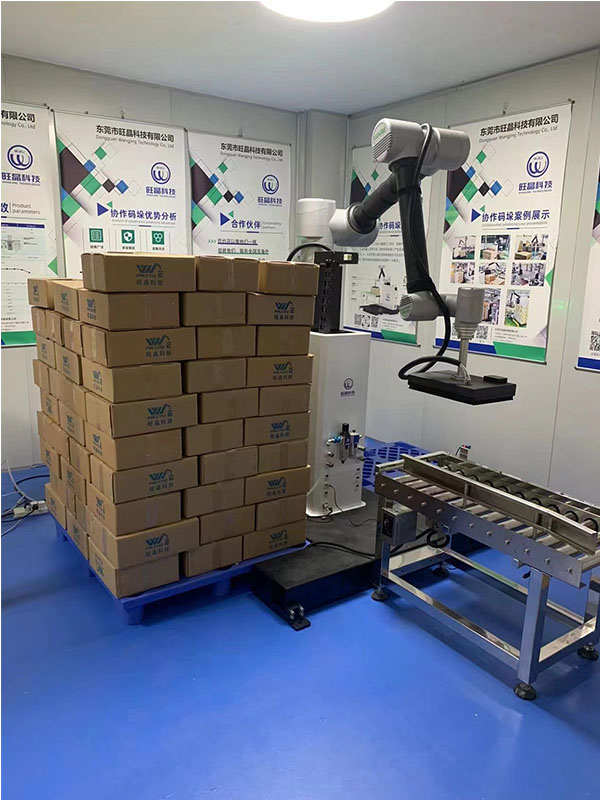
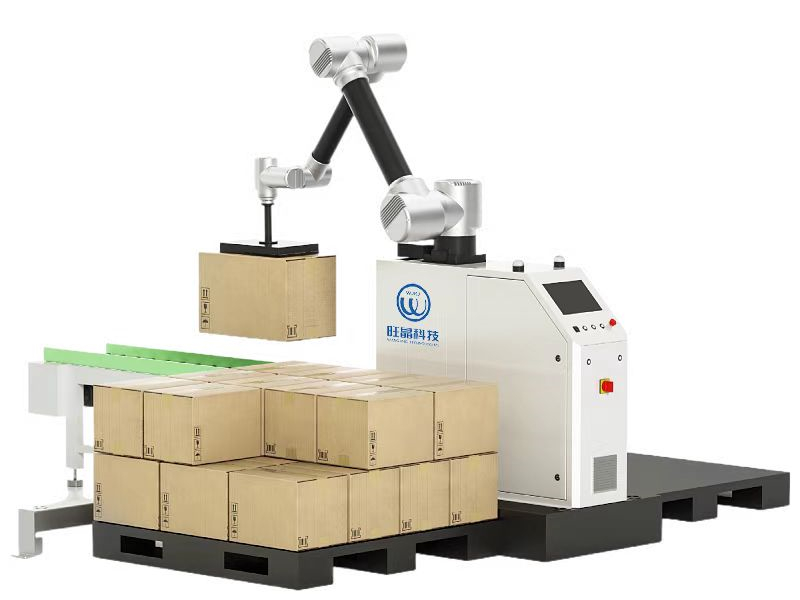
The fully automatic cooperative stacker is mainly composed of leveling belt conveyor, slow stop belt conveyor, transfer belt conveyor, tray bin, tray belt conveyor, arranging machine, bag pushing machine, stacker machine and stacker belt conveyor. Its automatic design ensures stable, safe and reliable posture. The working process of the stacker is fully automatic, and there is no need for manual control during normal operation, so it has a universal application field.


The workflow of the collaborative palletizer production line is as follows

Quantitative packaging scale - portable sewing machine - vertical inverted bag transport - uphill transport - horizontal type - belt conveyor to be climbed - uphill stacker - forklift outbound - warehousing

In order to unify the standard stacker, give full play to the high efficiency of the stacker handling robot and the working capacity of the stacker, increase the lifting line, and lift the packaging bag with reversed lines to a unified standard relative height.
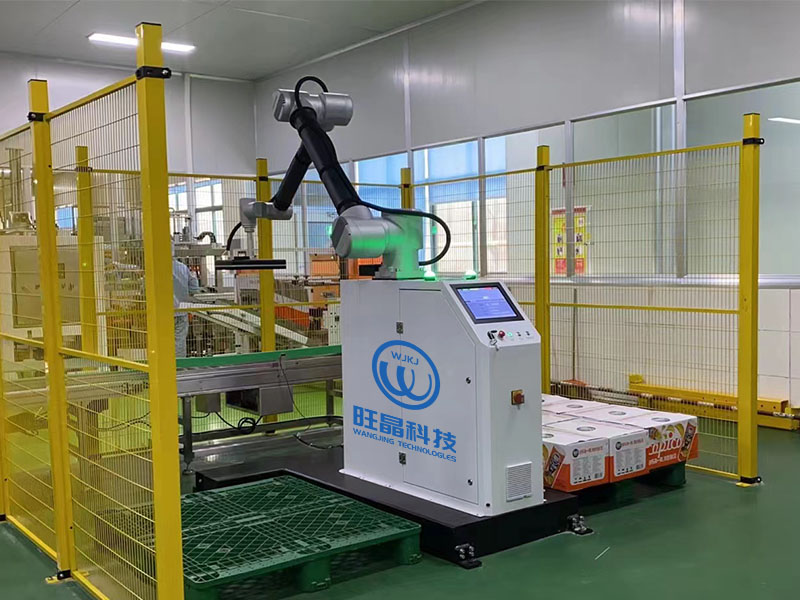
 

The fully automatic cooperative stacker has the advantages of compact structure, high working capacity, high speed and large bearing capacity. It is widely used in various production lines, such as chemical plants, grain crops, concentrated feed, etc.
The A axis of the palletizing robot is horizontal, the B axis is vertical, the C axis is its own rotation axis, and the D axis is the hand-held transmission axis.
The mechanical equipment of the stacking robot can complete the random adjustment of three lines and one machine, multiple lines and one machine, packaging, random disassembly and replacement of packaged products, random adjustment of product size, pallet position and size, stacking type of the stacking machine and other parameters according to the design scheme of the control module, flexible production, program flow and mobile phone software intelligent system of the mechanical equipment. It can be set through simple operation of the touch screen, and the robot can calculate the state of the stacker by itself.
The working efficiency of the stacker is greatly improved after being transported by the invention. It can directly save a lot of labor and greatly reduce labor costs. Under the routine system maintenance, the robot has been operating normally for more than ten years. In recent years, with the rise of automatic stacking machine production line for mass production, this kind of stacking machine system will have a more general industry prospect and development!
Copyright Notice:The copyright of this article belongs to the original author. If the source is wrong or your legitimate rights and interests are infringed, you can contact us via email, and we will deal with it in a timely manner.
read:2521times

Related articles

The market scale of industrial robots in China has reached 17.3 trillion yuan, and stacking robots h

The disadvantages of manual palletizing of cooperative palletizing robot are pointed out: the palletizing form is irregular, the palletizing is often reversed, and there are potential safety hazards. In the loading process, due to the irregular stacking form, the loading capacity is low and the transportation cost is high. Low stacking efficiency and high labor cost.
Market outlook2022-09-21
The market scale of industrial robots in China has reached 17.3 trillion yuan, and stacking robots h

The control technologies of the stacking robot based on artificial intelligence include

Compared with ordinary mechanical palletizer, the palletizing robot has the advantages of high efficiency, low failure rate and convenient maintenance, so it is widely used. The main task of palletizing robot control technology is to control the movement position, posture and trajectory, operation sequence and action time of industrial robot in the workspace. Now let's talk about the control technology of the stacking robot.
Market outlook2022-09-22
The control technologies of the stacking robot based on artificial intelligence include

With the development of artificial intelligence technology, the role of unmanned cooperative stackin

The role of robots in industry has replaced human workers in many manufacturing industries. Machines like mechanical arms make it possible for humans to perform tasks with brute force before automation. Now they have replaced heavy lifting and precision assembly. The use of industrial robots can not only help create products, but also reduce waste and improve safety.
Market outlook2022-10-06
With the development of artificial intelligence technology, the role of unmanned cooperative stackin

What is the working principle of palletizing robot

In our daily life, we often see or use palletizing robots. Just like when we go to the supermarket, many goods have to be put in high places. Some are manual and some are automatic. If manual operation is used, it is generally used in some small supermarkets, large malls, etc. However, in some large shopping malls or warehouses, it is not realistic to change the labor force. At this time, we need to set some programs to let the palletizing robot put in a specific position according to the set program.
Market outlook2022-11-03
What is the working principle of palletizing robot

As an industrial robot, palletizing robot is one of the key emerging industries for China to impleme

Cooperative palletizing robot, an industrial robot, is a key emerging industry in China's implementation of the manufacturing power strategy. The development level of robot industry is an important symbol to measure a country's innovation ability and industrial development level.
Market outlook2022-09-21
As an industrial robot, palletizing robot is one of the key emerging industries for China to impleme

In the future, what can cooperative robots bring to enterprises in the FMCG market

The food manufacturers attending the meeting paid special attention to cooperation and robots to minimize the dependence on human capital and achieve more convenient food solutions. A packaging engineer in charge of large and medium-sized food companies said in the report that about one fifth of the company's plants in North America use cooperative robots, "mainly for loading and stacking. We are ready to invest again in areas that can replace labor.
Market outlook2022-10-27
In the future, what can cooperative robots bring to enterprises in the FMCG market

Category column